
Introduction
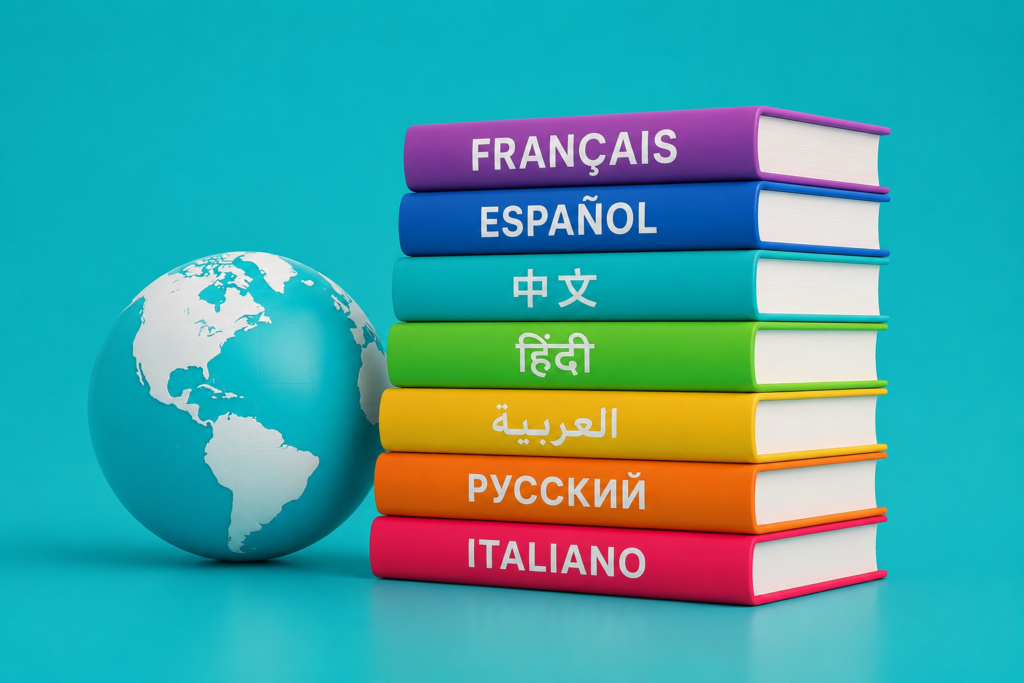
There are more than seven thousand languages spoken around the world. Every language reflects the history, culture, and values of the people who speak it. Some words cannot be translated directly into another language, while others reveal how different cultures see the world.
Learning a language is about much more than vocabulary and grammar—it’s also about understanding people.
Opening Question
Do you think learning a language changes the way we see the world? Why or why not?
Words That Don’t Translate
Some languages have words with no direct English equivalent.
Here are a few examples:
- Hygge (Denmark)—A feeling of comfort and warmth and of enjoying simple moments.
- Saudade (Portugal) – A deep feeling of missing someone or something.
- Ubuntu (Southern Africa)—The idea that people are connected through community and kindness.
- Komorebi (Japan)—Sunlight filtering through the leaves of trees.
- Fernweh (Germany)—A strong desire to travel to distant places.
Discussion
- Which word do you find the most interesting?
- Is there a word in your language that is difficult to translate?
- Can one word tell us something about a culture?
Around the World in Languages
Did you know?
- English is used as an international language in many areas such as business, aviation, and tourism.
- Papua New Guinea has more than 800 languages, making it one of the most linguistically diverse countries in the world.
- Some countries have more than one official language.
- Many people grow up speaking two or more languages every day.
- Thousands of languages are considered endangered because fewer people speak them each year.
Discussion
- Which fact surprised you the most?
- Why do you think some countries have so many languages?
- What are the advantages of growing up multilingual?
Language and Culture
Language often reflects everyday life.
For example, greetings, expressions of politeness, and ways of showing respect can differ greatly from one culture to another.
Discussion
- Have you noticed cultural differences when speaking English?
- Why is communication about more than just words?
- Can learning another language help us become more open-minded?
Idioms Around the World
Every language has colourful expressions that don’t make sense when translated literally.
Examples in English:
- Break the ice
- Once in a blue moon
- Hit the nail on the head
- The ball is in your court
Discussion
- Do you enjoy learning idioms?
- Are idioms difficult for language learners?
- Do idioms make conversations more interesting?
Languages in Everyday Life
Think about all the places where people use different languages every day.
- Travelling
- Watching films and TV series
- Reading books
- Listening to music
- Following sports
- Ordering food abroad
- Meeting people from other countries
Discussion
- Which situations motivate people to learn another language?
- Has knowing English opened any opportunities for you?
- Which language would you like to learn next?
Common Language Myths
People often hear statements like these:
- “Children learn languages faster than adults.”
- “You need to live abroad to become fluent.”
- “Some people just aren’t good at languages.”
Discussion
- Which statement do you hear most often?
- Do you agree with all of them?
- What advice would you give someone learning a new language?
Language in a Global World
Today it’s common to hear several languages in one city.
International travel, education, migration, and online communication have connected people more than ever before.
Discussion
- Do you think English has changed because it is spoken around the world?
- Is it important to keep local languages alive while learning international ones?
- What are the benefits of living in a multilingual society?
One Language, Many Stories
Think about a language that interests you.
It could be one you already speak, one you’re learning, or one you’d like to
learn.
Discussion
- What attracts you to that language?
- What do you think is the biggest challenge when learning it?
- If someone asked you why learning languages is worthwhile, what would you tell them?
Closing Reflection
“Every language offers a different way of understanding the world.”
Final Discussion
- Do you agree with this statement?
- Has learning English changed the way you communicate or think?
- If everyone spoke only one language, what do you think the world would gain—and what might it lose?